
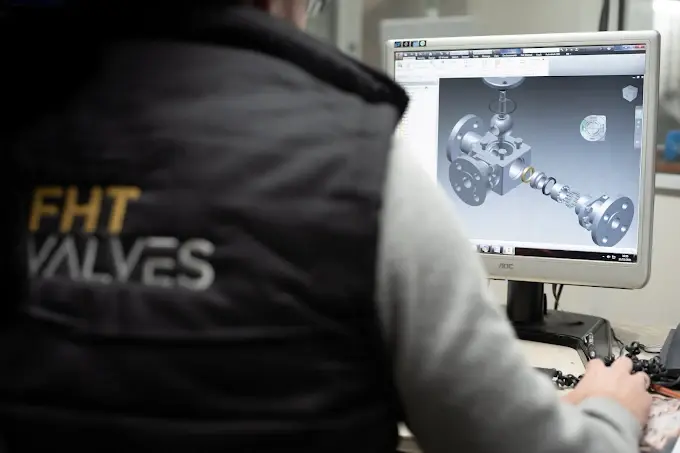
Ball valve experts are manufacturers and engineers who can design, select and validate a valve for a specific set of process conditions: pressure, temperature, fluid, applicable standards and expected service life. Their value lies not in the catalogue, but in knowing which configuration will run for years without leaks or unplanned shutdowns.
In critical applications such as hydrogen, LNG, oxygen, Oil & Gas or aggressive chemicals, a specification error is not detected on the test bench, but in the plant. For EPC contractors, procurement managers and plant managers, working with ball valve experts reduces technical risk and maintenance costs.
What it means to be an industrial ball valve expert
A ball valve expert masters three areas at once: mechanical design, materials and international standards. Manufacturing industrial ball valves in series is not enough. You need to understand why a valve fails and how to prevent it at the design stage.
In practice, this means mastering:
- Construction types. Floating ball, trunnion-mounted ball, full or reduced bore, wafer, DBB or 3-way designs.
- Seat types. Soft (PTFE, PEEK) or metal-to-metal, depending on temperature, abrasion and required tightness.
- Materials. Carbon steels, stainless steels and special alloys, and their compatibility with each fluid.
- Design and connection standards. ASME B16.34, DIN/EN and ANSI, pressure classes and flange types.
Floating or trunnion-mounted ball, the first design decision
In a floating ball valve, line pressure pushes the ball against the downstream seat to create the seal. It is an effective design for small diameters and moderate pressures.
In a trunnion-mounted ball valve, the ball is supported by trunnions and the seats move towards it. This reduces operating torque and wear in large diameters and at high pressures. Confusing the two is one of the most common specification errors.
Certifications an expert manufacturer should hold
Certifications are objective proof that experience translates into controlled processes. For critical-service ball valves, the most relevant are:
- ISO 9001. Quality management system audited by an external body.
- API 6D. American Petroleum Institute specification for pipeline valves in Oil & Gas.
- Fire Safe (API 607 / ISO 10497). Certifies that the valve remains tight after fire exposure.
- SIL 3 (IEC 61508). Safety integrity level for valves in safety instrumented systems, such as emergency shutdown (ESD).
In addition to valid certificates, material traceability through EN 10204 3.1 certificates should be required.
Where ball valve experts make the difference
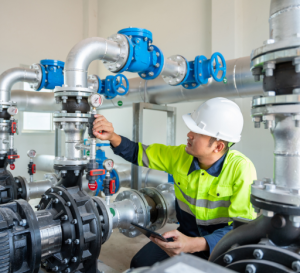
Specialist knowledge shows above all in applications where a standard valve cannot cope.
Hydrogen and oxygen
Hydrogen demands very high tightness against an extremely small molecule, along with materials resistant to embrittlement. Oxygen requires specific cleaning and degreasing to eliminate the risk of ignition. Both services are handled with special ball valves designed for that duty.
Cryogenics and LNG
With LNG below −160 °C, the valve needs an extended bonnet, materials with good low-temperature toughness and specific cryogenic testing.
Abrasive fluids, high temperature and high pressure
This is where metal-to-metal seats, hard coatings, PMSS technology or heating jackets for fluids that solidify when cold come into play.
How to choose ball valve experts for your project
Before selecting a supplier, check these five criteria:
- Proven experience in your sector, with references in similar applications.
- In-house engineering and custom valve design capability when the catalogue does not cover the requirement.
- Complete certification and documentation from the technical offer stage.
- Quality control and testing, such as hydrostatic and leak tests to API 598 or ISO 5208 and non-destructive testing. See how this works in a real quality system.
- Technical support and spare parts throughout the valve’s service life.
Why work with ball valve experts
A well-specified ball valve prevents leaks, shutdowns and premature replacements. The difference between a standard supplier and ball valve experts lies in upfront engineering, certification and process control.
At FHT Valves we have been designing and manufacturing ball valves in Mungia (Bizkaia, Spain) for over 25 years, to DIN and ANSI standards and with API 6D, Fire Safe, ISO 9001 and SIL 3 certifications. If your project requires a valve for critical service, our technical team can help you specify it.
Frequently asked questions about ball valve experts
What does a ball valve expert do?
They analyse the process conditions, select the right design, materials and seat type, and validate the valve through testing and certification. The aim is to ensure tightness and reliability throughout the entire life cycle.
What is the difference between an expert manufacturer and a distributor?
An expert manufacturer designs, machines, assembles and tests the valve with in-house engineering, and can adapt it to specific requirements. A distributor sells standard third-party products with less scope for customisation.
What certifications should industrial ball valves have?
The most common in critical applications are ISO 9001, API 6D, Fire Safe (API 607 / ISO 10497) and SIL 3. The specific requirements depend on the sector, the project standards and the valve’s function.
When is a custom-designed ball valve the right choice?
When service conditions go beyond what the standard catalogue covers: extreme pressures or temperatures, corrosive or abrasive fluids, special dimensions or functional safety requirements.
Which ball valve is used in severe service?
Typically, a valve with metal-to-metal seats, hard coatings and a trunnion-mounted design for large diameters or high pressures. The final configuration depends on the fluid, temperature and cycling frequency.